
Basalt
Fine-grained volcanic rock covering most of Earth's surface.

Tony Hisgett from Birmingham, UK · CC BY 2.0
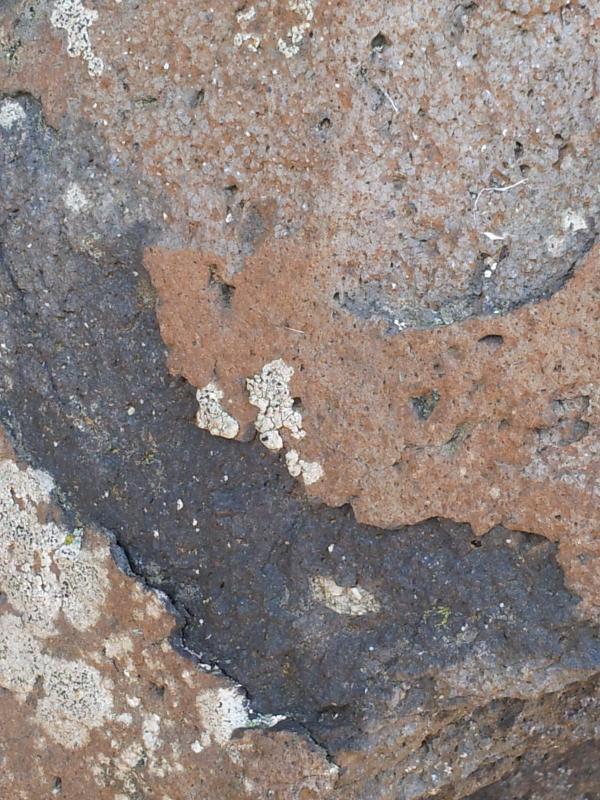
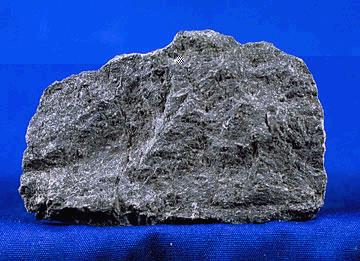
Basalt is an aphanitic (fine-grained) extrusive igneous rock formed from the rapid cooling of low-viscosity mafic lava exposed at or near the surface of a rocky planet or moon. More than 90% of all volcanic rock on Earth is basalt, and it is also an important rock type on other planetary bodies, including Venus, the Moon, and Mars. Basalt's composition and physical properties provide clues to processes deep in Earth's interior.
- composition
- 45–52% silica, rich in magnesium and iron
- density
- 2.9 g/cm³
- viscosity
- 10⁴ to 10⁵ cP (similar to ketchup)
- color
- Usually dark grey to black
- classification
- Mafic volcanic rock
- planetary occurrence
- Earth, Venus, Moon, Mars
Lore & Background
Basalt is composed mostly of oxides of silicon, iron, magnesium, potassium, aluminium, titanium, and calcium. Geologists classify it using the QAPF diagram when possible, requiring less than 10% feldspathoid, less than 20% quartz, and plagioclase making up at least 65% of its feldspar content. When mineral composition is impractical to determine, chemical classification via the TAS diagram defines basalt as volcanic rock with 45–52% silica and no more than 5% alkali metal oxides. Basalt is usually dark grey to black due to high augite or other dark pyroxene minerals, but lighter-colored leucobasalts occur with high plagioclase content. The rock often contains vesicles formed from dissolved gases, and when these are abundant, the rock is called scoria.
Reader's Guide
Basalt is the most abundant volcanic rock on Earth, with more than 90% of all volcanic rock being basaltic. Its low viscosity, due to relatively low silica content, allows lava flows to spread over great areas, forming flood basalts that can cover hundreds of thousands of square kilometres. Basaltic magmas originate from the upper mantle, and their chemistry provides clues to deep Earth processes. Basalt is also significant on other planetary bodies: the plains of Venus (~80% of the surface) are basaltic, the lunar maria are flood-basaltic lava flows, and basalt is common on Mars. Different tectonic settings produce distinct basalt types, including tholeiitic basalt (ocean floor, large oceanic islands, continental flood basalts), mid-ocean ridge basalt (MORB), alkali basalt (continental rifting and hotspots), high-alumina basalt (volcanic arcs), and boninite (back-arc basins).
Did You Know?
- More than 90% of all volcanic rock on Earth is basalt.
- Basalt has the same chemical composition and mineralogy as slow-cooling, coarse-grained gabbro.
- The eruption of basalt lava is observed by geologists at about 20 volcanoes per year.
- The bulk of the plains of Venus, covering about 80% of the surface, are basaltic.
Formation and Enormous Scale
Flood basalts represent the most extraordinary expression of extrusive igneous activity on Earth, produced when a mantle plume or hotspot breaches the surface and unleashes lava in volumes that dwarf ordinary volcanic events. A single province can accumulate hundreds of thousands of cubic kilometers of basalt within a window of less than a million years, with individual eruptive episodes each pouring out hundreds of cubic kilometers. Because the lava is highly fluid, it does not simply pile upward; instead it races laterally for hundreds of kilometers from its source vents, blanketing regions tens of thousands of square kilometers in extent. The result is a sequence of nearly horizontal flows laid down in rapid succession, flooding the landscape on a continental scale. This form of intraplate volcanism is set apart from every other volcanic style by sheer magnitude and speed. Rampino and Stothers identified eleven such episodes in the last 250 million years, and subsequent discoveries, including the vast Ontong Java Plateau and the Chilcotin Group, have only expanded the catalog of these colossal igneous events.
Trap Rock and the Architecture of Erosion
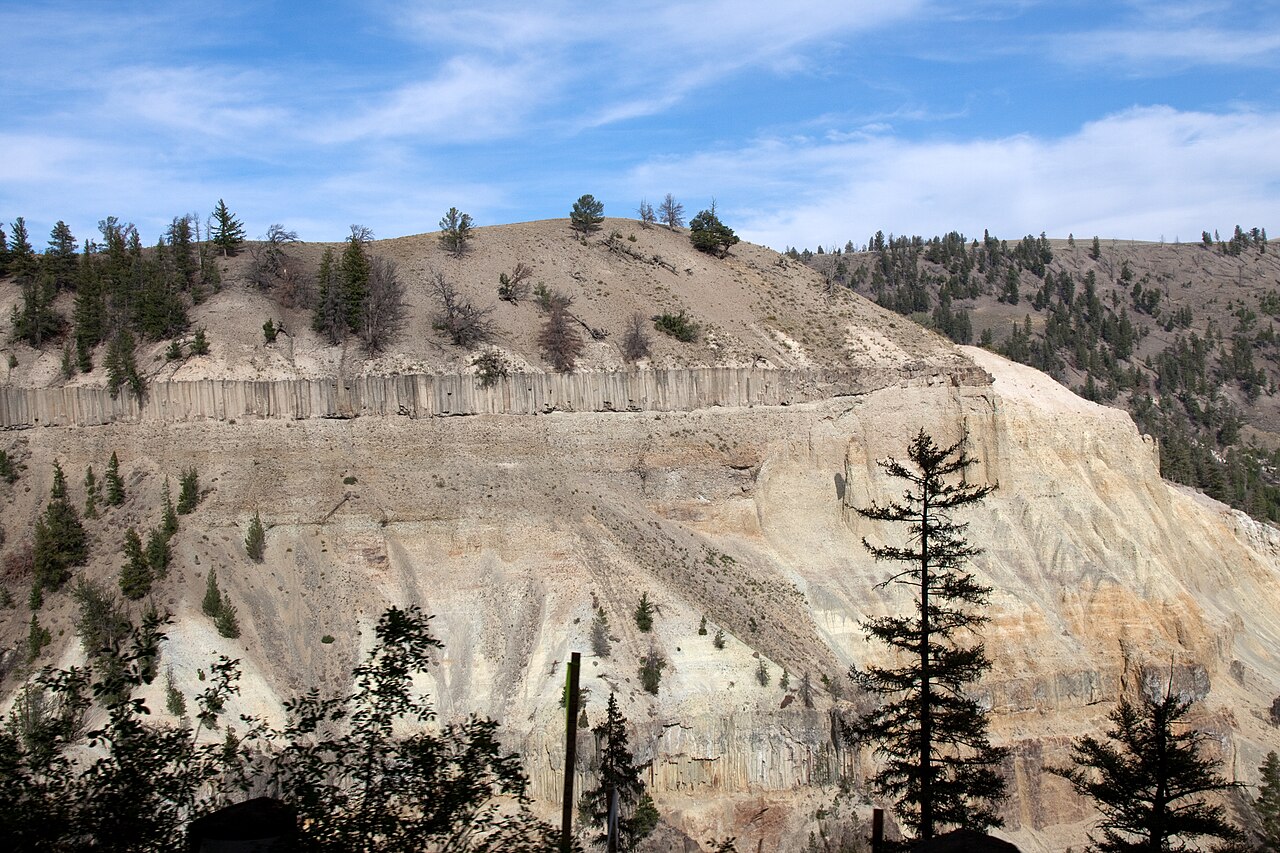
The name trap derives from the Swedish word trappa, meaning staircase, a fitting reference to the stepped canyon walls that eroded flood basalt landscapes display. In these canyons, the lower portions of individual flows form sheer cliffs while the upper surfaces or interbedded sedimentary layers create gentler slopes, producing the characteristic stairstep profile. Total thicknesses frequently exceed 1,000 meters, built from hundreds of thin flows ranging from a few meters to tens of meters thick, with rare individual flows reaching 100 meters. The Greenstone Flow on Michigan's Keweenaw Peninsula, at 600 meters thick, may represent a remnant of a lava lake comparable in size to Lake Superior. Deep erosion also reveals the plumbing system beneath: vast arrays of parallel dikes, some in the Columbia River Plateau stretching beyond 100 kilometers, and radial dike sets spanning thousands of kilometers in diameter. Sills such as New Jersey's Palisades Sill sit beneath the flows, and these sheet intrusions are typically diabase whose chemistry closely mirrors the overlying basalt, sometimes allowing geologists to link a specific dike to a specific flow.
Columnar Beauty and Pipe-Stem Vesicles
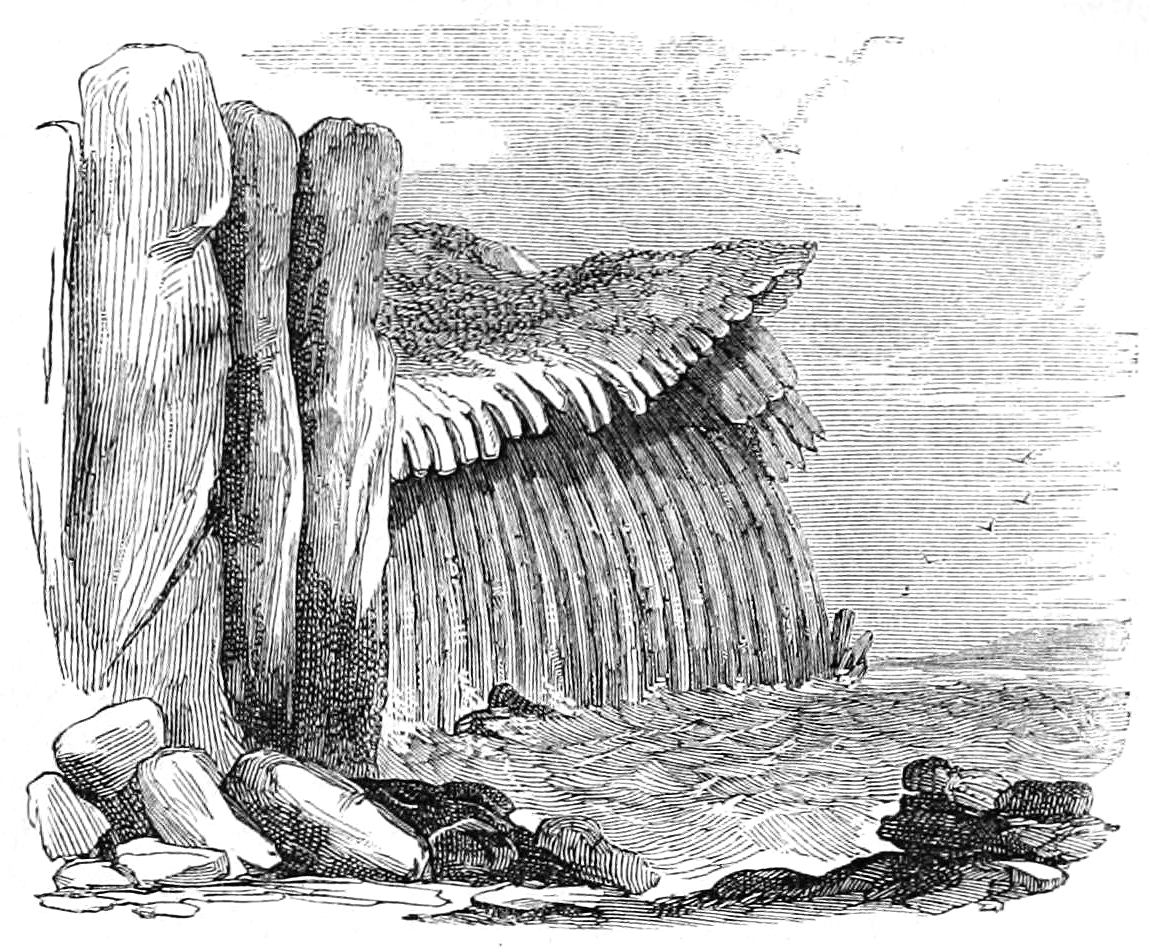
As flood basalt cools and contracts, it fractures into striking columnar joints, typically pentagonal or hexagonal in cross-section, aligned parallel to the direction of heat escape. Because heat dissipates more slowly from the base of a flow than from its top, the lower third of each flow develops larger, more regular columns, while the upper portion fractures more irregularly. Geologists borrow Greek temple terminology, calling the orderly lower columns the colonnade and the chaotic upper fractures the entablature. In exceptionally thick flows like the Greenstone Flow, columns can reach around 10 meters in diameter. Another distinctive feature is the pipe-stem vesicle: because flood basalt cools slowly overall, dissolved gases rise and form bubbles near the top, leaving most of the flow massive and vesicle-free. However, the thin glassy chilled margin at the base and the rapidly crystallizing rock just above it trap vesicles in place. These are often later filled with calcite or other pale minerals, creating a light-colored core against the dark basalt that resembles the stem of a clay tobacco pipe.
Petrology and the Shadow of Mass Extinction
At the microscopic level, flood basalt exhibits an aphanitic texture of tiny interlocking crystals, with plagioclase grains embedded in or wrapped around pyroxene in random orientations, signaling that crystallization began almost immediately after emplacement. Unlike many other extrusive rocks, flood basalts are nearly free of large phenocrysts and rarely contain xenoliths, reflecting their homogeneous, gas-poor nature that makes pyroclastic material exceedingly rare. Compositionally, most flood basalts are quartz tholeiites, with olivine tholeiite and alkali basalt occurring less frequently. Beyond their petrology, these provinces carry a darker legacy: large igneous provinces have been linked to five of Earth's mass extinction events, and some may even be associated with bolide impacts. The Deccan Traps of India stand as one of the most famous examples, and the broader catalog of flood basalt provinces, from the Ontong Java Plateau to the Columbia River Basalt Group, reminds us that the planet's most violent volcanic episodes may have reshaped the course of life itself.
Gallery
Frequently Asked Questions
What is Basalt?
Basalt is a dark, fine-grained volcanic rock that forms when thin, iron- and magnesium-rich lava cools quickly at or near a planet's surface. It accounts for over 90% of all volcanic rock found on Earth.
What is Basalt's composition and key physical properties?
It contains roughly 45–52% silica along with high concentrations of magnesium and iron, giving it a characteristic dark grey-to-black appearance. Its density sits around 2.9 g/cm³, and its viscosity is comparable to ketchup (10⁴–10⁵ cP).
Where does Basalt appear across the solar system?
Beyond Earth, basalt has been identified on Venus, the Moon, and Mars, making it one of the most widespread volcanic rock types in the inner solar system.
How does Basalt form?
It crystallizes when low-viscosity mafic magma erupts and cools rapidly at or near the surface, preventing large mineral grains from developing. This quick solidification is what gives basalt its signature aphanitic (fine-grained) texture.
Why is Basalt important to geologists?
Because it makes up the vast majority of volcanic rock on Earth and other rocky bodies, its chemistry and physical properties serve as a window into deep mantle processes. Studying basalt helps scientists reconstruct conditions far below the surface where the magma originated.
More in Geology And Landforms 1-17
Spotted an error? Know more?
This is a living reference — every entry is fact-audited, and reader corrections feed straight into our audit queue. Suggest an edit · See this site's audit record